
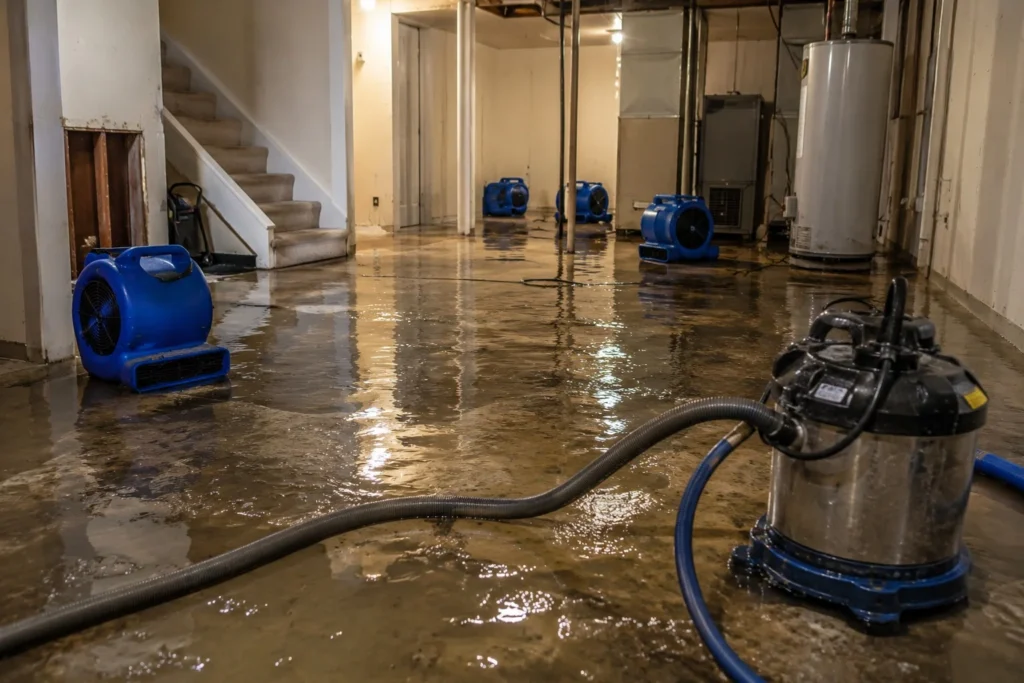
Basement flooding cleanup in Montpelier Station starts with getting the water out fast and ends with a dry, restored basement. Basements are standard in Virginia Piedmont construction, and they flood regularly due to the region’s clay soils, 43 to 47 inches of annual rainfall, and aging foundation construction. Call (540) 360-9292 for 24/7 emergency basement pump-out and restoration across Orange County.
Why Basements Flood in Orange County
Basement flooding is not random. There are specific reasons it happens more often in Orange County than in many other parts of Virginia.
Clay Soils and Hydrostatic Pressure
The Piedmont region’s clay-heavy soil does not drain well. After heavy rain, clay holds water at the surface and pushes it laterally and downward against your foundation walls and floor slab. This hydrostatic pressure forces water through cracks in poured concrete, through mortar joints in block foundations, and through the cold joint where the floor meets the wall.
Older homes in the Madison-Barbour Rural Historic District often have stone or unreinforced block foundations that are especially vulnerable. Water finds its way through mortar joints that have softened over decades of freeze-thaw cycles.
Heavy Rainfall Events
Orange County averages 43 to 47 inches of rainfall per year, above the national average of 38 inches. But average rainfall is not what floods basements. It is the intense events that overwhelm drainage systems.
A thunderstorm that drops 3 to 4 inches in two hours produces more runoff than the soil and your gutters can handle. That water has to go somewhere, and if your grading slopes toward your foundation or your downspouts discharge too close to the house, it goes into your basement.
The May 2018 storms dumped over 7 inches of rain across the Orange area in a single month, nearly double the normal May average. Roads flooded, bridges closed, and basements across the county took water.
Sump Pump Failures
If your basement has a sump pump, it is your first line of defense. When it fails during a rain event, water rises quickly. Common sump pump failure causes include power outages during storms, a stuck float switch, a burned-out motor, or a discharge line that has frozen during winter.
We respond to sump pump failure floods regularly throughout Orange County. If your pump is more than 7 to 10 years old, consider having it tested before storm season.
Foundation Cracks and Deterioration
Every foundation cracks over time. Settlement, soil movement, freeze-thaw cycles, and hydrostatic pressure all create pathways for water. In older Orange County homes, particularly those built before the 1960s, foundation walls may be stone, brick, or unreinforced block, all of which develop water entry points as they age.
Drainage System Failures
French drains, footer drains, and curtain drains can clog with sediment and tree roots over time. When your below-grade drainage system fails, there is nothing between the groundwater and your basement floor.
What Happens When We Arrive at Your Flooded Basement
Water Removal
We deploy submersible pumps for standing water above 2 inches. For shallower water, truck-mounted extractors pull water from carpet, padding, and concrete surfaces. Most basement pump-outs take 2 to 6 hours depending on water volume and basement size.
Moisture Mapping
After the visible water is out, we use moisture meters and thermal imaging to check walls, framing, insulation, and any finished materials. Basements often have moisture behind wall panels, under vinyl plank flooring, and in framing that is not visible until you check.
Content Removal and Protection
We move salvageable contents to dry areas and document damaged items for your insurance claim. For finished basements with furniture, electronics, and personal belongings, we can arrange full content pack-out and restoration.
Structural Drying
LGR dehumidifiers and air movers go to work on the concrete, framing, and wall materials. Basements are harder to dry than above-grade spaces because concrete absorbs water deeply and releases it slowly. We typically run drying equipment for 5 to 7 days for a basement flood, sometimes longer for thick concrete or block walls.
We monitor moisture levels daily. Equipment comes out only when readings confirm dry standard has been reached.
Antimicrobial Treatment and Mold Prevention
We apply antimicrobial treatments to all affected surfaces after drying. In a basement environment where humidity is already elevated, mold prevention is critical. If mold is already present from a previous water event or chronic moisture, we follow IICRC S520 mold remediation protocols. [Learn more about mold remediation.]
Repair and Restoration
For finished basements, we replace damaged drywall (flood cut 12 to 18 inches above the waterline), insulation, baseboards, flooring, and trim. For unfinished basements, repairs focus on structural elements and mechanical systems.
How Much Does Basement Flooding Cleanup Cost?
Basement flooding cleanup costs in the Orange County area typically range from $1,500 to $8,000 depending on the severity.
- Minor basement flooding (shallow water, unfinished, caught quickly): $500 to $1,500
- Moderate flooding (several inches, some finished areas affected): $1,500 to $4,000
- Significant flooding (deep water, finished basement, extended exposure): $4,000 to $8,000
- Severe flooding with mold (multi-day standing water, mold growth): $6,000 to $15,000+
Insurance coverage depends on the cause. A burst pipe that floods your basement is typically covered. A sump pump failure may be covered if you have a sump pump rider on your policy. Natural groundwater intrusion and rising water from storms are generally not covered by standard homeowner’s insurance. Flood damage requires a separate NFIP policy. Orange County participates in NFIP as Community No. 510203.
Basement flooding right now? Call (540) 360-9292. We pump out basements 24/7.
How to Reduce Basement Flooding Risk
You cannot control how much rain falls on Orange County, but you can control how well your home handles it.
- Clean gutters and downspouts twice a year. Clogged gutters overflow and dump water directly against your foundation.
- Extend downspouts at least 6 feet from your foundation. Splash blocks alone are not enough.
- Grade soil away from your foundation. The ground should slope away from the house at a minimum of 6 inches of drop over the first 10 feet.
- Test your sump pump before spring and fall rain seasons. Pour a bucket of water into the pit and make sure the pump activates, runs, and drains properly.
- Install a battery backup for your sump pump. Power outages and storms happen at the same time, which is exactly when your pump needs to work.
- Seal visible foundation cracks with hydraulic cement. This is a temporary fix that buys time, not a permanent solution, but it helps.
- Consider interior waterproofing if your basement floods repeatedly. A properly installed interior drain tile system with a sump pump is the most reliable long-term solution.