
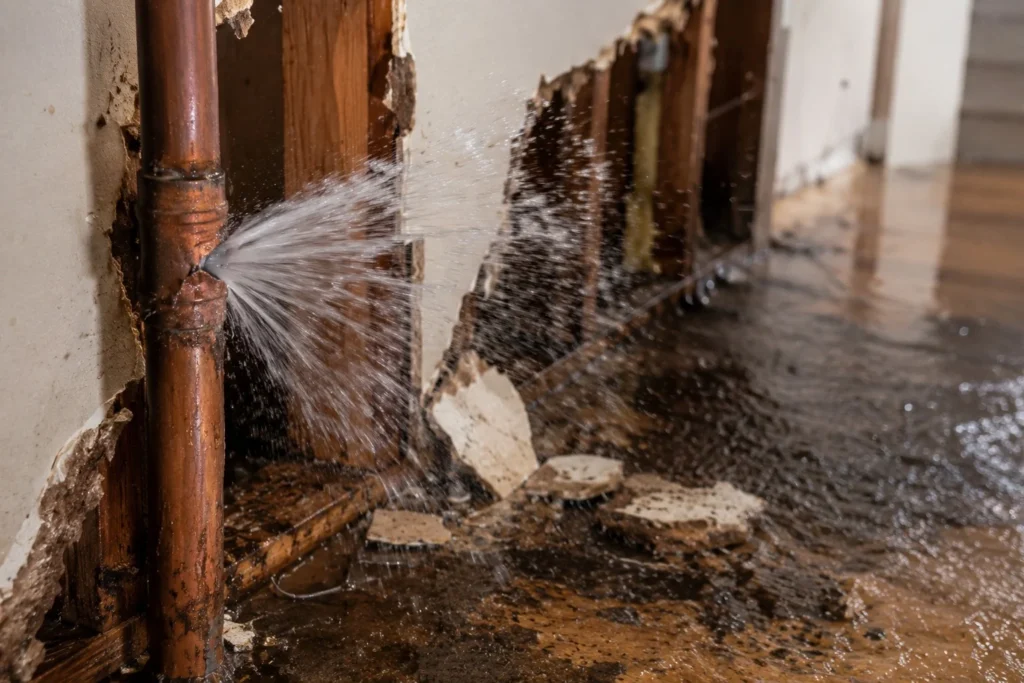
Burst pipe water damage repair starts with fast water extraction and ends with your home fully restored. In Montpelier Station and across Orange County, pipe bursts are the single most common cause of residential water damage, especially in older homes with galvanized or polybutylene plumbing. Call (540) 360-9292 for 24/7 emergency response.
Why Pipes Burst in Orange County Homes
Orange County sits in the Virginia Piedmont where winter temperatures regularly drop below freezing from November through March. Average winter lows hit 28 degrees Fahrenheit, and cold snaps can push temperatures well into the teens.
When water freezes inside a pipe, it expands with enough force to split copper, crack PVC, and rupture galvanized steel. But the burst does not always happen where the ice forms. The pressure buildup pushes in both directions from the frozen section, and the pipe often fails at its weakest point, which could be a joint, a fitting, or a section thinned by decades of corrosion.
Galvanized Steel Pipes
Many homes built before the 1960s along Route 20 and through the Madison-Barbour Rural Historic District still have original galvanized steel supply lines. These pipes corrode from the inside out over decades. The interior wall of the pipe builds up mineral deposits that restrict flow and weaken the pipe walls. When thermal stress from a freeze-thaw cycle hits a galvanized pipe that is 50 or 60 years old, failure is common.
Polybutylene Pipes
Homes built between 1978 and 1995 throughout Orange County may have polybutylene (poly-B) pipes. This gray plastic piping was widely used but is now known to become brittle over time, especially when exposed to chlorine in the water supply. Polybutylene failures can be sudden and can occur at fittings, joints, or anywhere along the run.
Copper Pipes With Pinhole Leaks
Copper supply lines develop pinhole leaks as they age, caused by a combination of water chemistry, electrolysis, and corrosion. A pinhole leak can run for weeks before you notice water stains, a musty smell, or soft drywall. By that time, the damage behind the wall can be significant.
Pipes in Vulnerable Locations
The pipes most likely to freeze and burst are those in exterior walls, uninsulated attics, crawl spaces, and garages. In many older Orange County homes, plumbing was run through exterior wall cavities with minimal insulation. When a cold snap hits, these are the first pipes to go.
How Much Water Does a Burst Pipe Release?
A standard residential supply line under typical municipal pressure (40 to 60 PSI) can release 4 to 8 gallons per minute. That does not sound like much until you do the math:
- 1 hour undetected: 240 to 480 gallons
- 4 hours undetected: 960 to 1,920 gallons
- 8 hours (a full workday or overnight): 1,920 to 3,840 gallons
Many pipe bursts happen while homeowners are at work, asleep, or away for the weekend. An 8-hour burst in an upstairs bathroom can send thousands of gallons through ceilings, walls, and floors before anyone discovers it.
This is why pipe bursts consistently cause the most expensive water damage claims among Orange County homeowners.
What to Do When a Pipe Bursts in Your Home
If you discover a burst pipe, take these steps immediately:
- Shut off the main water supply. The shutoff valve is typically near the water meter or where the main supply line enters your home. If you are on well water, shut off the pump.
- Turn off power to the affected area at the breaker panel if water is near electrical outlets, appliances, or wiring.
- Open faucets. After shutting off the main, open cold water faucets to drain remaining water from the lines and relieve pressure.
- Document everything. Take photos and video of the water damage, the burst pipe location, and all affected materials before moving anything. Your insurance adjuster will need this.
- Move valuables off wet floors and away from the water path if you can do so safely.
- Call (540) 360-9292. We answer 24/7 and can walk you through next steps while we dispatch a crew.
Do not wait to see if the water dries on its own. It will not dry properly without professional extraction and dehumidification, and in Virginia’s humid climate, mold can start growing within 24 hours.
Our Burst Pipe Water Damage Repair Process
Assessment and Source Control
We confirm the water source is stopped and use thermal imaging cameras to trace the full path of water through your home. Water from an upstairs pipe burst travels through wall cavities, along floor joists, and into rooms that may appear dry on the surface. Our thermal scans and moisture meter readings map every affected area.
Water Extraction
Truck-mounted extractors and portable units remove standing water from carpets, padding, hardwood, and hard surfaces. For carpet, we use weighted extraction tools that press into the fibers and pull water from the pad beneath, where most of the moisture hides.
Structural Drying
LGR dehumidifiers and strategically placed air movers dry out wall cavities, subfloors, framing, and concrete. We take daily moisture readings at multiple points throughout the drying period and adjust equipment placement based on the numbers. Drying typically takes 3 to 5 days for a standard pipe burst.
Flood Cutting and Material Removal
Drywall that has absorbed water needs to be cut out, typically 12 to 18 inches above the waterline. This allows the wall cavity to dry and prevents mold growth behind intact-looking drywall. We also remove wet insulation, baseboards, and any other materials that cannot be salvaged.
Antimicrobial Treatment
After drying, we apply antimicrobial treatments to all affected surfaces to prevent mold and bacteria growth. In Orange County’s humid subtropical climate, this step is not optional. Skipping it is how mold problems start 2 to 4 weeks after a water event.
Repair and Restoration
We replace drywall, baseboards, insulation, flooring, and trim as needed to return your home to its pre-damage condition. The goal is that when we are done, you cannot tell where the water damage was.
How Much Does Burst Pipe Water Damage Repair Cost?
The cost of repairing burst pipe water damage in Orange County depends on three factors: how much water was released, how long it sat, and what materials were affected.
Typical cost ranges:
- Minor pipe burst (caught quickly, one room, carpet or hard surface): $800 to $2,000
- Moderate pipe burst (two to three rooms, drywall and flooring affected): $2,000 to $5,000
- Major pipe burst (multiple rooms, extended exposure, mold involvement): $5,000 to $12,000+
- Upstairs pipe burst with ceiling/floor damage below: $3,000 to $8,000
Standard Virginia homeowner’s insurance covers burst pipe damage as a sudden, accidental event. This typically includes water extraction, structural drying, material removal, antimicrobial treatment, and repairs. Your deductible applies. We document every step with photos, moisture readings, and detailed scope-of-work reports using Xactimate, the same estimating software your adjuster uses.
Pipe burst right now? Call (540) 360-9292. We respond 24/7 across Orange County.
How to Prevent Pipe Bursts in Older Orange County Homes
If your home was built before the 1980s, these steps can significantly reduce your pipe burst risk:
- Insulate pipes in crawl spaces, attics, exterior walls, and garages. Foam pipe insulation is inexpensive and effective.
- Keep cabinet doors open under kitchen and bathroom sinks during cold snaps to let warm air reach the pipes.
- Let faucets drip during extreme cold. A slow drip keeps water moving and reduces the pressure buildup that causes bursts.
- Maintain heat at 55 degrees or above, even when you are away. A heating bill is cheaper than water damage.
- Know where your shutoff valve is before you need it. In an emergency, minutes matter.
- Consider repiping if your home still has galvanized or polybutylene plumbing. The cost of repiping is a fraction of the cost of a major pipe burst and the water damage that follows.
Questions about your home’s pipe burst risk? Call (540) 360-9292 for an honest assessment.